Welcome to NCUB


Updates

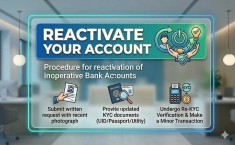
Has your Nilambur Co-operative Urban Bank account been inactive for over 2 years? No worries—reactivating it is simple, free of charges, and follows the latest RBI guidelines for your convenience.
Step-by-Step Reactivation Process
Submit a Request: Visit any of our Home Branch and submit your application form with your details.
Update KYC: Share Officially Valid Documents (OVD) like Aadhaar, PAN, passport, address proof, and a recent photo.
Verification: Our team verifies your identity and documents (originals for check). For joint accounts, all holders may need to sign.
Perform a Transaction: Make a small deposit or withdrawal to fully activate—interest continues even during dormancy.
Account Active: Full services restored typically in 1-2 working days.
Key Facts
No Charges: RBI prohibits fees for reactivation or minimum balance during inactivity.
Prevent Future Inactivity: Regular transactions and updated KYC keep it operative.
?If over 10 years inactive, balances may be in RBI's Depositor Education Fund— we'll guide recovery. Visit a branch or call our helpline today!
To use the Reserve Bank - Integrated Ombudsman Scheme (RB-IOS), a customer must follow a specific escalation process. You cannot approach the Ombudsman directly without first trying to resolve the issue with your financial service provider.
Step 1: File a Formal Complaint with your Bank
Step 2: Wait for the Mandatory 30-Day Period
Step 3: Prepare Your Documents
Before filing, ensure you have the following ready in digital format (PDF or JPEG):
Step 4: Lodge the Complaint with the RBI
You can file your complaint through any of these three channels:
Step 5: Track and Await Resolution
Note on Timelines: You must file your complaint with the Ombudsman within one year of receiving a reply from the bank, or within one year and 30 days if no reply was received
RBI Integrated Ombudsman Scheme

At the Nilambur Co-operative Urban Bnak, we want you to understand exactly how DICGC protects your deposits in different account types, like joint accounts or proprietorship setups. This ensures you maximize your coverage up to Rs.5,00,000 per depositor per bank.
Coverage for Joint Accounts
Joint accounts are insured separately based on name order and combinations.
If multiple joint accounts have names in the same order (e.g., A & B, A & B), balances aggregate for Rs.5 lakh total cover.
Different orders (e.g., A & B vs. B & A) or different groups (e.g., A & B vs. A & C) get separate Rs.5 lakh cover each.
Each co-owner can claim up to Rs.5 lakh from their share, plus individual accounts add more protection.
Proprietorship Accounts
Proprietorship deposits (e.g., "ABC & Co." where you're sole proprietor) aggregate with your personal individual accounts for a combined Rs.5 lakh limit.
They are treated as the same capacity/right as your personal holdings.
Other Common Capacities
Guardian for minor: Separate Rs.5 lakh cover from personal accounts.
?Director/partner/trustee: Also separate, as different capacities.
All branches of our bank count together per capacity.
Maximize Your Protection
Combine individual, joint (varying orders), and other capacities to get up to ?5 lakh per type—e.g., a couple could cover Rs.15 lakh total in one bank. Keep KYC updated for quick claims within 90 days if needed.
Contact Now
1930 is the national helpline number in India for reporting cyber financial frauds.
It is managed under the Indian Cyber Crime Coordination Centre (I4C), which functions under the Ministry of Home Affairs.
You should call immediately if:
Money has been debited due to IMPS fraud
Unauthorized ATM / Debit / Credit card transactions
Internet banking fraud
Fraud through QR code scanning
Any other online financial scam
The faster you report (preferably within minutes), the higher the chance of:
Blocking the transaction
Freezing the fraudster’s account
Recovering your money
You can also file a complaint at:
National Cyber Crime Reporting Portal
(https://cybercrime.gov.in)

Risks, Responsibilities and Liabilities of Customers Transacting Through Mobile Banking and Debit Cards
The use of Mobile Banking services and Debit Cards offers convenience and accessibility. However, customers are advised to understand the inherent risks and their responsibilities while undertaking such transactions.
1. Risks Associated with Mobile Banking and Debit Card Transactions
a) Technology & System Risks
b) Cyber Security Risks
c) Device & SIM Related Risks
d) Third-Party Risks
2. Customer Responsibilities
Customers shall:
Failure to adhere to these responsibilities may increase the risk of unauthorized transactions.
3. Customer Liability
Customer liability shall be determined in accordance with applicable regulatory guidelines issued by the Reserve Bank of India (RBI) from time to time.
A. Zero Liability of Customer
Customer shall have zero liability if:
B. Limited Liability of Customer
Customer liability may be limited as per RBI guidelines if:
C. Full Liability of Customer
Customer shall bear full liability if:
4. Reporting of Unauthorized Transactions
Customers must immediately report unauthorized transactions through:
(For cyber financial fraud, customers may also report immediately by dialing 1930, the national cybercrime helpline.)
Prompt reporting significantly enhances the possibility of recovery.
5. Compensation
As per RBI Circular (DPSS.CO.PD.No.629/02.01.014/2019-20), customers shall be compensated at Rs. 100 per day for delays beyond the prescribed TAT for failed electronic transactions (ATM/UPI/IMPS/NEFT etc.) where reversal is not effected on time.
6. Disclaimer
The Bank shall not be responsible for:
7. Acceptance
By using Mobile Banking and Debit Card services, the customer acknowledges having read, understood, and agreed to these risks, responsibilities, and liabilities.

Ticket Support
Contact Now